Stubborn and sturdy stains can be a headache when they are not treated properly or immediately and stay on your garment forever. Likewise, the panic is real when seeing your everyday casual wear to your favorite is stained even a little bit. However, removing stains in today’s time can be easy and worth it with a blend of perfect timing and science. It can be easily banished with a proper step-by-step stain removal guide we will provide you in this article.
Whether you’re learning about why the stains are hard to remove different types of stains such as oil, grease, wood stains, rust, blood, ink, or even poop stains, we’ve got you covered. In this article, you can learn about how to understand and identify the stains and fabrics, the importance of immediate action, specific techniques based on stain types, and the science behind the stain removal process to help you restore and keep your clothes in pristine condition.
Why Are Stains Hard to Remove From Clothes?
Stains are hard to remove from clothes due to their physical bonds with the fabric fibers and chemical makeup. They contain various substances, each with unique properties, and the longer a stain is left untreated, the more it stains and is difficult to remove. When a stain is left to dry, it chemically bonds with the fibers, making extraction more challenging. Likewise, the conditions surrounding the stain, such as humidity and temperature, also play a crucial role in easy removal. Fabric types impact stain behavior; natural fibers like cotton absorb stains more due to their porous structure, while synthetic fibers may resist some stains but can still trap others in surface layers.
Furthermore, different stain types react differently, making the removal process less or more challenging depending on the type. Oil-based stains like grease and butter are hydrophobic, meaning they resist water and cling tightly to fabric fibers. Dye stains from wine and ink are formulated to impart color and bind strongly to the fabric’s molecular structure. Protein-based stains, such as those from blood or milk, can coagulate and adhere firmly, particularly when exposed to heat. If stains are not treated quickly, they can set into the fabric through drying, heat exposure, or chemical bonding, making them nearly impossible to remove completely.
Why Is Immediate Action Crucial for Stain Removing from Clothes?
Immediate action is crucial for removing stains, as a delay allows the stains to pierce deep into the fabric and begin to oxidize. As time goes by, stains can bond more firmly with the fabric fibers, making them harder to remove. Oxidation, particularly with stains like wine or blood, causes the color to darken and undergo chemical changes, often resulting in permanent discoloration. The longer a stain remains, the more it interacts with air, light, and the fabric itself. The difference between a fresh stain and a set-in stain is significant.
A fresh stain is mainly on the surface and loosely attached to the fibers, making it easy to clean with simple methods. In contrast, a set-in stain has seeped deeply into the fabric, forming stronger bonds that can alter the structure of the material. This increased integration requires more aggressive cleaning techniques, which may still prove ineffective and sometimes risk damaging the garment.
Acting quickly significantly increases the chances of successfully removing stains by preventing them from embedding and chemically altering the fabric. When you address a stain immediately, you prevent it from oxidizing and setting, allowing cleaning agents to work more effectively and lifting the stain before it fully attaches to the fabric. Moreover, a quick action to stain removal minimizes the need for hard scrubbing and chemicals, which reduces the risk of fabric damage and increases the likelihood of restoring the fabric to its original condition.
What to Consider Before Starting the Stain Removal Process?
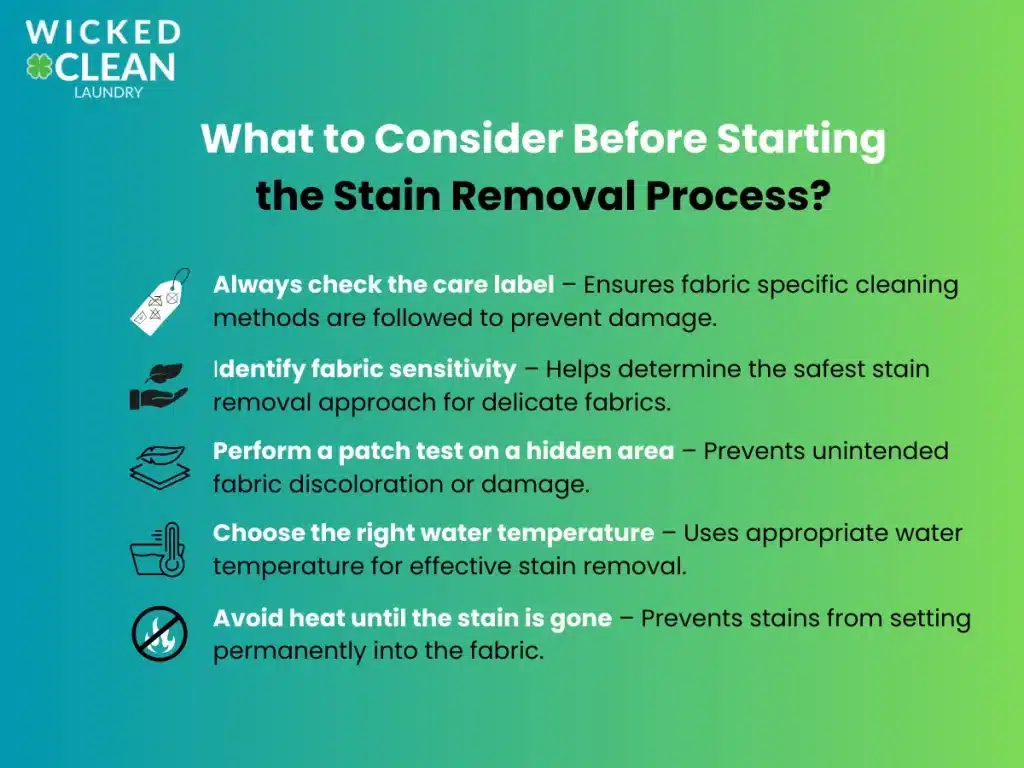
Before starting the stain removal process, it is crucial to identify the stain type and the fabric. As different stains react differently to cleaning agents, knowing what caused the stain helps you choose the most effective way to treat them. Likewise, gentle fabrics like silk and wool require gentle treatment compared to cotton or polyester, as they can handle stronger solutions. Furthermore, you should check the care label, identify fabric sensitivity, perform a patch test on a hidden area, and choose the right water temperature to remove stains effectively.
Always check the care label
Checking the label before starting the stain removal process is important for essential information about the fabric’s care requirements. Fabrics like wool, silk, and rayon are sensitive to water, heat, and certain chemicals and can be easily damaged if mistreated. Likewise, ignoring the cleaning instructions on the label could lead to color fading, shrinking, and even permanent fabric damage. Labels are kept are care instructions about cleaning methods, water temperature, and warnings about dry cleaning or bleach; hence, you should check them and follow the instructions currently to avoid ruining the clothes.
Identify fabric sensitivity (e.g., silk, wool, lace)
Identifying fabric sensitivity before the stain removal process is crucial because different fabrics react differently to cleaning techniques and agents. Delicate and soft fabrics like lace, wool, and silk are particularly vulnerable to damage from scrubbing, prolonged exposure to water, and harsh chemicals. These fabrics often feature detailed structures or natural fibers that can easily weaken, shrink, or discolor. For sensitive materials, it is important to perform a spot test in a discreet area to check how the fabric reacts to the cleaning agent. Nonetheless, if the fabric advises against home wash or the stain is tough, it is better to take the cloth to a professional dry cleaner.
Perform a patch test on a hidden area
Performing a patch test on a hidden area before starting the stain removal process is important to prevent accidental damage or discoloration to the fabric. Some cleaning agents can react differently depending on the fabric type, potentially causing fading, staining, or weakening of the fibers. Doing a patch test lets you see how the material will respond to the chemicals without risking visible damage to the entire fabric. The right way to test is to apply a very small amount of the strain remover to an invisible spot like the inside hem or seam and wait for a few minutes. If the fabric stays unaffected and doesn’t have any change in texture and color, it is safe to proceed further.
Choose the Right Water Temperature
Choosing the right water temperature is one of the crucial, effective, and safe stain removal processes. Cold water is ideal for removing protein-based stains, such as blood, sweat, or dairy, because hot water can “cook” the proteins and permanently set the stain in the fabric. Cold water is also safer for delicate fabrics that may shrink or get damaged with heat. In contrast, hot water is more effective for oily or greasy stains, as it helps break down oils more efficiently. It is also useful for disinfecting heavily soiled garments. However, always check the fabric care label first, as using the wrong water temperature can worsen the stain or damage the fabric.
Avoid Heat Until the Stain is Gone
Heat should be completely avoided while removing the stain, as it can stain the fabric permanently. Likewise, when exposed to heat from a dryer, an iron, or even hot water, the stain chemically bonds with the fabric, making it more difficult, if not impossible, to remove later. Dryers and irons can “set” stains into fabrics, particularly for protein-based stains like blood or dairy and dye-based stains like ink. Once heat locks a stain in, even powerful stain removers may not be effective. That’s why it’s crucial to treat and completely remove the stain before applying any heat during the cleaning process.
What Tools and Supplies Are Essential for Removing Stains From Clothes?
To treat stains and spots, you need some cleaning supplies and household products like a soft brush or sponge for scrubbing. mild detergent, white vinegar, hydrogen peroxide, baking soda, rubbing alcohol, and different stain removals tailored to specific stains.
Tools & Equipment
Having the right tools and equipment for optimal stain removal makes the process more effective and safe. Basic paper towels or white cloths are useful for drying stains as they absorb the stain without risking color transfer. Likewise, a soft-bristled toothbrush helps gently scrub the stained area and remove stains without damaging the fabric.
Similarly, wearing gloves is essential for protecting your hands from strong cleaning agents, particularly when using bleach or stain removers. A spray bottle enables you to apply water or cleaning solutions evenly and accurately to the stained area, which helps to minimize fabric saturation. By using these tools correctly, you can effectively target the stain while keeping the rest of the garment safe and clean.
Natural & Household Ingredients
Lemon juice, baking soda, vinegar, and hydrogen peroxide are some of the natural and household ingredients used for stain removal. Lemon juice is effective for removing rust and mild discoloration because of its natural bleaching properties. However, it should only be used on light-colored fabrics and must be rinsed out quickly to prevent weakening the fibers.
White vinegar is excellent for deodorizing and removing stains from coffee, tea, or sweat. It is safe for most fabrics but should be diluted with water before application. Likewise, baking soda can be used as a gentle deodorizer to lift stains and absorb odors or oil and grease stains. Lastly, hydrogen peroxide can be used for mild bleaching on organic and blood stains with care to prevent damaging your clothes.
Chemical & Commercial Removers
Chemical and commercial stain removers are often necessary for optimal stain removal, as they contain specialized ingredients designed to break down specific types of stains more effectively than soap and water alone. Chemical products like OxiClean are perfect for general stains like wine, juice, and dirt on whites and color-safe fabrics.
Likewise, Shout is perfect for salad dressing, makeup, or oily stains. Enzyme detergents are great for stains like blood, grass, and baby formula, and rubbing alcohol is best for dye-based stains like cosmetics and markers. Lastly, Ammonia is highly effective on tannin stains like coffee, sweat, and tea. Hence, choosing the right chemical or commercial removers based on the stain type increases the chances of full stain removal.
What Is the General Step-by-Step Process to Remove a Stain from Clothes?

Effectively removing a stain from clothes and fabrics involves an orderly process. First, you should take immediate action to blot the stain with a clean cloth to absorb it. Secondly, identify the stain type and fabric to select the right cleaning method. Then pre-treat the stain with a suitable solution, and rinse thoroughly with cold water to remove residue. Before drying the clothes, you should inspect them for any remaining stains and, if present, repeat the process for optimal results.
Step 1: Identify Stain Type and Fabric
To effectively treat a stain, start by identifying its source, such as oil from food, dye from beverages, or protein from bodily fluids. Next, determine the type of fabric, whether it’s delicate silk, sturdy cotton, or synthetic material. This information is crucial for selecting the right cleaning method, helping to remove the stain without damaging the fabric.
Step 2: Scrape Off Excess Residue
Carefully use a spoon or blunt knife to gently scrape away any solid or thick residue from the stained area. This prevents the stain from spreading or soaking deeper during the cleaning process. Take your time to avoid damaging the surface.
Step 3: Apply Pre-Treatment Solution
To effectively address a stain, apply a suitable stain remover or liquid detergent directly to the affected area. If you prefer a natural solution, mix baking soda and vinegar or use dish soap with water. Make sure to choose a treatment that matches the stain type for the best results. Gently rub the fabric to help lift the stain, then rinse thoroughly to remove any cleaning residue.
Step 4: Gently Agitate the Stain
In the fourth step, gently rub the fabric together or use a soft-bristled brush to loosen the stain before washing it off. When working with delicate materials such as silk or lace, be especially cautious as these fabrics can easily snag or tear. After loosening the stain, proceed to wash the fabric and repeat the process if the stain is still strong.
Step 5: Allow Solution to Sit
Next, allow the cloth to sit on the stained area for approximately 5 to 10 minutes, to enhance the effectiveness of the pre-treatment solution. This soak time is crucial as it enables the active ingredients in the formula to break down the stain more thoroughly. By giving it this short duration, you maximize the stain-fighting potential.
Step 6: Rinse with Proper Water Temperature
Rinse the stained area using water at the recommended temperature to help lift the residue. Generally, cold water is effective for protein-based stains like blood, and hot water is suitable for stubborn oily stains from grease. Using the right water temperature helps loosen the stain while preventing the fabric from being damaged.
Step 7: Wash as Directed on the Label
After the stain treatment procedure, wash your clothes as per the specific instructions on the care labels. These guidelines help users know the clear washing, drying, and ironing methods and prevent color fading, distortion, and shrinking.
Step 8: Air-Dry Before Machine Drying
Air-drying the fabric after strain treatment is essential, as dryer heat can permanently set any lingering stain residue. Before machine drying, carefully inspect the garment and repeat the stain removal process even if a faint trace remains.
How to Treat Different Types of Stains on Clothes?
To treat different types of stains on clothes accordingly, you should identify the stain type, like grease, oil, ink, or others, first, and act quickly by pre-treating with dish soap, enzyme-based detergent, or a mixture of water and vinegar accordingly. After pre-treating the garment, wash it according to the fabric instructions on the care label. Likewise, you should ensure that the stain is completely removed before drying, as the heat can set the stain permanently.
How To Remove Grease Stains From Clothes?
To remove grease stains from clothes, start by blotting the stain with a paper towel to absorb any excess grease. Next, sprinkle baking soda or cornstarch onto the stain to help soak up the remaining grease. Allow it to sit for 15 to 20 minutes, then brush it off. After that, apply liquid dish detergent directly to the stain and gently scrub it in with a brush or your fingers. Let it sit for a few minutes before rinsing with warm water. Wash the garment as usual. If the stain persists, you can repeat the process or use a stain remover before laundering.
How To Remove Ink Stains From Clothes?
To remove ink stains from clothes, start by placing a paper towel or cloth under the stained area to absorb any excess ink. Next, blot the stain with rubbing alcohol or hand sanitizer using a cotton ball or a clean cloth. Gently dab the stain, avoiding any rubbing. For stubborn stains, apply a mixture of dish soap and water, then gently scrub the area with a toothbrush. After treating the stain, rinse the fabric with cold water and launder it as usual. Before drying, check to ensure the stain is gone, as heat can cause the stain to set permanently.
How To Remove Blood Stains From Clothes?
To remove blood stains from clothes, act quickly and rinse the stain with cold water to dilute the blood, as hot water can set it. Apply a small amount of mild detergent or soap and gently rub it. If the stain persists, use a 1:1 mixture of hydrogen peroxide and water to help break down the blood stain. Likewise, for stubborn stains, soak the fabric in cold water with baking soda or use a stain remover. Launder the clothing in cold water afterward, and check the fabric care instructions before using any cleaning agents.
How To Remove Rust Stains From Clothes?
To remove rust stains from clothes, start by applying a rust remover or a mixture of lemon juice and baking soda directly to the stain. Gently rub the area with a soft brush or cloth to break down the stain. Allow it to sit for a few minutes, then rinse with cold water. If the stain persists, soak the fabric in a solution of white vinegar and water for 30 minutes before washing as usual. Nonetheless, you should always check the fabric care label and test any solution on a small, inconspicuous area to avoid damage.
How To Remove Tomato Stains From White Clothes?
To remove tomato stains from white clothes, first, gently blot the stain with a paper towel or cloth to absorb excess sauce. Start by rinsing the fabric with cold water from the back to help push the stain out. Next, apply a stain remover or a mixture of dish soap and water to the stained area. Allow it to sit for 10 to 15 minutes before gently scrubbing with a soft brush. Then, wash the garment in the hottest water that is safe for the fabric. If the stain remains, try soaking the fabric in a mixture of white vinegar and water before washing it again.
How To Remove Cooking Oil Stains From Clothes?
To remove cooking oil stains from clothes, start by blotting the stain with a paper towel or cloth to absorb any excess oil. Next, apply a small amount of dishwashing liquid or liquid laundry detergent directly to the stain and gently rub it in using your fingers or a soft brush. Then, allow it to sit for about 5 to 10 minutes to help break down the oil. After that, wash the fabric in the hottest water that is safe for the material, using a standard laundry detergent. If the stain remains, repeat the process or try using a stain remover before washing again. Always air-dry the item, as the heat from the dryer can set the stain.
How To Remove Makeup Stains From Clothes?
To remove makeup stains from clothes, start by gently blotting the stain with a clean cloth to absorb any excess product. Next, apply a small amount of liquid dish soap, laundry detergent, or makeup remover directly onto the stain. Allow it to sit for a few minutes to help break down the makeup. Afterward, gently rub the fabric together or use a soft brush to lift the stain. Rinse the area with cold water. If the stain persists, you may need to repeat the process before washing the garment as usual. For particularly stubborn stains, consider using a stain remover before laundering. Moreover, always check the garment care label to avoid damaging the fabric.
How To Remove Old Chocolate Stains From Clothes?
To remove old chocolate stains from clothes, begin by scraping off any excess chocolate with a spoon or a blunt knife. Next, run cold water through the back of the stain to help flush out as much of the chocolate as possible. After that, apply a stain remover or liquid laundry detergent directly to the affected area and gently rub it in. Allow it to sit for about 10–15 minutes before washing the garment in the hottest water that is safe for the fabric. If the stain persists, you can repeat the process or use a mixture of vinegar and baking soda before washing again. Finally, air-dry the clothing to ensure the stain is completely gone.
How To Remove Poop Stains From Clothes?
To remove poop stains from clothes, start by gently scraping off any excess material using a spoon or a dull knife. Next, rinse the stained area with cold water to eliminate as much residue as possible. After rinsing, apply a stain remover or liquid detergent directly onto the stain and let it sit for 10 to 15 minutes. Then, wash the clothing in the warmest water temperature that is appropriate for the fabric. If the stain remains, repeat the process before drying, as heat can set the stain. Finally, air dry the clothing to ensure the stain is completely gone.
How To Remove Wine Stains From Clothes?
To remove wine stains from clothes, begin by gently blotting the stain with a clean cloth to absorb any excess wine. Next, rinse the affected area with cold water to prevent the stain from setting. Then, apply a stain remover or dish soap directly to the stain and let it sit for about 5 to 10 minutes. After that, wash the garment in the warmest water that is safe for the fabric. If the stain persists, you can either repeat the process or try using a mixture of vinegar and baking soda as a last resort. Finally, air dry the clothing to avoid heat setting the stain.
How To Remove Grass Stains From Clothes?
To remove grass stains from clothing, it’s important to act quickly. Start by blotting the stain with a clean cloth to remove any excess grass. Next, apply liquid laundry detergent directly to the stain and gently rub it in. Allow the detergent to sit for about 10 to 15 minutes to help break down the stain. Then, rinse the fabric with cold water. If the stain is still visible, you can try using a mixture of vinegar and water or applying a stain remover. Finally, launder the garment as you normally would, making sure to check that the stain is completely gone before drying it. This method effectively removes grass stains without damaging the fabric.
How Do You Treat Stains on Delicate or Special Fabrics?
Treating stains on delicate and soft fabrics requires a careful step-by-step approach. Some stains, particularly those caused by oils or dyes, may require 2 to 3 treatment cycles for complete removal. Begin by gently blotting the stain with a mild stain remover or a soap solution. If the stain remains, switch to a slightly stronger option, such as a fabric-safe stain remover, to prevent damaging the fabric. It’s crucial to test the solution on an inconspicuous area first to check for any adverse reactions.
Furthermore, do not use the dryer until the fabric is completely clean. The heat from the dryer can set the stain permanently, making it more challenging to remove. If needed, air-dry the fabric after treatment to check if the stain has been successfully removed. If the stain is still present, repeat the treatment process. When escalating from milder to stronger solutions, do so carefully to avoid damaging the fabric while ensuring effective stain removal.
When Should You Use Commercial Stain Removers?
Commercial stain removers should be used when home remedies are ineffective or when dealing with particularly tough or complex stains. Commercial products are designed to break down stubborn set-in stains more effectively than home remedies. The special enzymes, chemicals, and surfactants are formulated to tackle oil, grease, wine, ink, and other stains that may not respond to simple household treatments. Hence, chemical or commercial stain removers are the top go-to choice for tough stains.
For stubborn or set-in stains: When regular cleaning methods fail to remove stubborn or set-in stains, it’s best to use commercial stain removers. These products are specially formulated to tackle tough stains like grease, wine, or ink that ordinary detergents can’t eliminate.
Oil and grease stains: Oil and grease stains should be removed with commercial stain removers as they are tough and harder to remove with regular washing methods. The commercial stain remover breaks down grease and oils easily from the fabrics for more effective cleaning.
Delicate fabrics requiring specialized care: Delicate fabrics like silk, wool, and lace can be easily damaged by hard chemicals when removing stains. You should choose products specifically labeled safe for delicate material to prevent fabric damage.
Time-sensitive situations: In the context of using commercial stain removers, time-sensitive situations refer to scenarios where quick action is crucial to prevent a stain from setting into the fabric. As mentioned above, the quicker you treat the stain, the easier and effective it is to lift the stain before it becomes permanent.
How to Use Commercial Stain Removers Safely
To use commercial stain removers safely, you should always follow the instructions on the label, pre-test on a hidden area, apply directly to the stain, follow timing instructions, and rinse and wash promptly for the best outcomes. You should avoid blindly sparring chemicals on the clothes to prevent damage, color fading, or shrinking.
Read Product Labels Thoroughly
You should read product labels thoroughly and review warnings, ingredients listed, and instructions on the stain remover process to ensure you use the product correctly and safely. Reading product label helps you understand the proper application process and any precautions for fabric you’re cleaning.
Pre-Test on a Hidden Area
Before submerging your clothes in stain removers, you should pre-test on a hidden area of the fabric such as hidden corner or inner seam to avoid damage, shrinking, or discoloration of the fabric.
Apply Directly to the Stain
You should apply the commercial stain remover directly onto the stained area without diluting it or using it on the entire cloth. This is to ensure that the stain remover specifically targets and works on stains effectively.
Follow Timing Instructions
Allow the stain remover to sit on the fabric for the recommended amount of time to ensure optimal effectiveness while also preventing any damage or discoloration. Always check the product label for specific guidelines regarding timing.
Rinse and Wash Promptly
After using a commercial stain remover, you should quickly rinse the stained area with water and then wash the fabric according to the care instructions. This helps prevent the stain from setting further and reduces the risk of damaging the fabric.
What Are the Most Common Stain Removal Mistakes to Avoid?
Some of the common stain removal mistakes are acting too slowly to remove stains when fresh, as waiting too long allows it to set permanently. Likewise, rubbing the stain, using hot water on protein-based stains, ignoring fabric care labels, overloading the washing machine, and drying before the stain is effectively removed are some other mistakes to avoid.
Rubbing the stain (can spread or set it)
Rubbing a stain is ineffective because it can push the stain deeper into the fabric, spreading it further or setting it, making it harder to remove. The friction from rubbing can also damage the fabric fibers.
To remove the stain, gently blot it with a clean cloth or paper towel, beginning from the outer edge and moving inward. This technique helps absorb the stain without spreading it. For more stubborn stains, apply the appropriate stain removers or detergents before washing the item.
Ignoring care labels
Neglecting care labels can be detrimental because it may cause damage or deterioration to your clothing. Care labels provide essential instructions on how to properly wash, dry, and maintain fabrics to preserve their quality and lifespan. Ignoring them can result in shrinking, fading, or fabric wear, which could make the garment unusable sooner.
The key is to consistently read and follow the care labels, as they provide guidance on the appropriate temperature, detergent, drying method, and any specific care needed. This ensures that clothing remains in good condition and lasts longer.
Drying too soon (heat sets the stain)
Drying a stain too quickly, especially with heat, can “set” the stain, making it much more difficult to remove. Heat, such as that from a dryer or hot water, causes the stain to bond with the fabric fibers, essentially fixing it in place.
To prevent setting the stain, it is important to first treat the stain by blotting, soaking, or using appropriate stain removers before drying. Only dry the item once you are certain that the stain is completely gone or significantly reduced.
Mixing incompatible chemicals (e.g., bleach and ammonia)
Mixing incompatible chemicals like bleach and ammonia is hazardous because it produces toxic gases, such as chloramine and hydrazine. These gases can irritate the eyes, nose, and lungs, and in high concentrations, they can be deadly.
To avoid this, you should never mix cleaning products that contain bleach with those containing ammonia. Always read product labels and use cleaning products in well-ventilated areas. If accidental mixing occurs, evacuate the area immediately and ventilate by opening windows and doors.
What If You Can’t Get the Stain Out? Let Wicked Clean Laundry Handle It
When dealing with tough stains, delicate fabrics, or expensive clothing, sometimes, home remedies may not suffice primarily due to lack of proper stain identification, limited access to industrial-grade products, improper handling or delicate fabrics, time sensitivity, and not using the right technique or temperature for cleaning. This can lead to the gradual degradation of the fabric, discoloration, or even texture damage over time. That’s where professional laundry services come in handy. With access to industrial-grade cleaning products, experts like Wicked Clean Laundry Services easily handle even the most persistent stains and treat delicate fabrics with the utmost care. Whether it’s a challenging stain or a specialized treatment for your luxury garment, Wicked Clean Laundry is the go-to solution to keep your wardrobe looking fresh, clean, and in top condition.